
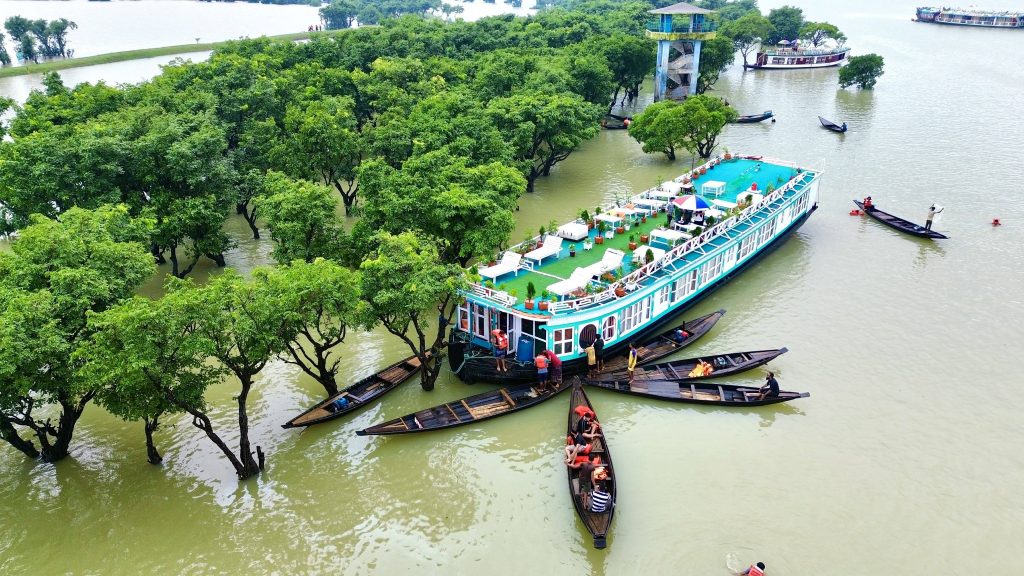
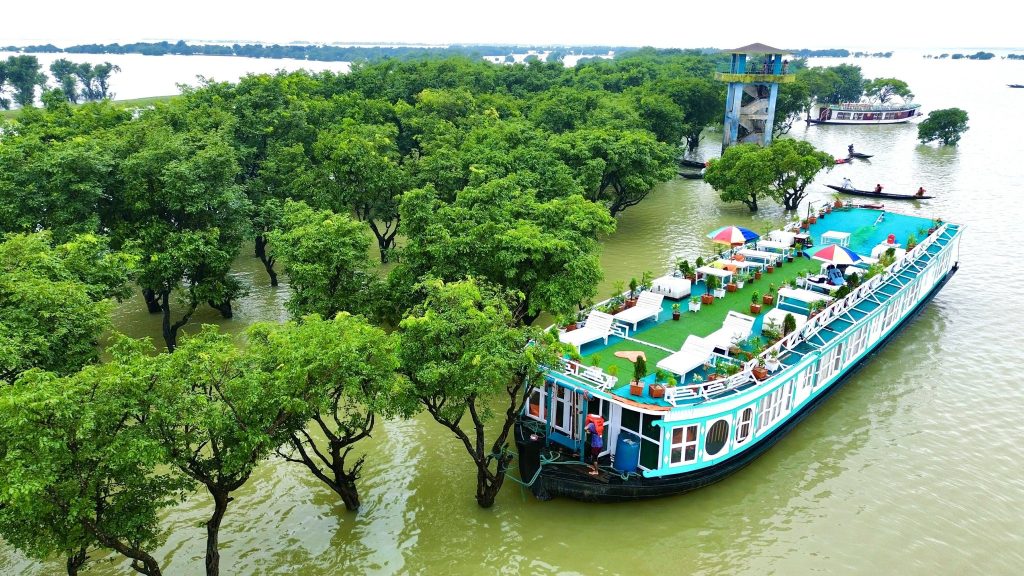


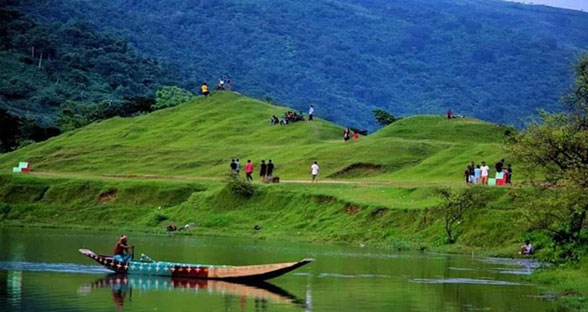
Tanguar Haor is the second largest sweetwater swamp area in the Sunamganj district, the area is about 100 sq km. After Sundarbans, it is the most beautiful largest sweetwater swamp in the northeast reign of Bangladesh is located in Dharmapasha of Sunamganj district and Tahirpur Upazila. This Haor is decorated with outstretched water, Water Forests, blue sky, hills, and green environment. In the foothills of Jaintia hills, Khasia of Meghalaya in India, Tanguar Haor is full with a huge habitat including fish, birds and other aquatic animals. The total area of Tanguar Haor is 6912 acres. However, during the monsoon, this Haor area goes up to 20,000 acres for increasing the water.
Tanguar Haor is very rich with natural resources. It has developed great biodiversity consisting of 140 species of fish, 12 species of frogs, 1 species of amphibians, 6 species of turtles, 7 species of lizards, 21 species of snakes. and more than 150 species of reptiles. In winter, there are about 250 species of migratory/guest birds in this Haor. It is estimated that 20/25 lakh birds were in the TanguarHaor in the last winter season.
From Tanguar Haor, the hills of Meghalaya of India are seen clearly. About 30 small fountains or tributaries from Meghalaya came to Tanguar Haor. There is a watchtower on the side of the Haor. The water in the surrounding areas is very transparent as if anyone can see the floor of the Haor from the above. The main two bird sanctuaries of the Tanguar Haor are the Leuchamara and Berberia Beel.
The construction of this Haor is with 120 Beals and 180 low-level/Kanda mills familiarly known to the local people as “Noikuri Kandar Soikuri Beal.” There are nearly small/large 46 floating village/island in the Tanguar Haor. The Government of Bangladesh declared Tanguar Haor as Ecologically Critical Area (ECA) in 1999. In 2000, Tanguar Haor took place on the Ramsar site list.
Overview
is situated at the foothills of the Meghalaya hills (India), which creates a stunning backdrop of greenery and small waterfalls that feed into the basin.
-
Expansion: The area covers roughly 100 square kilometers, but during the monsoon season, the water level rises significantly, expanding the wetland from its base size to nearly 20,000 acres.
-
Structure: It is composed of a complex network of 120 “beels” (large surface water bodies) and 180 “kandas” (mounds), housing around 46 floating villages.
Houseboat Exploration
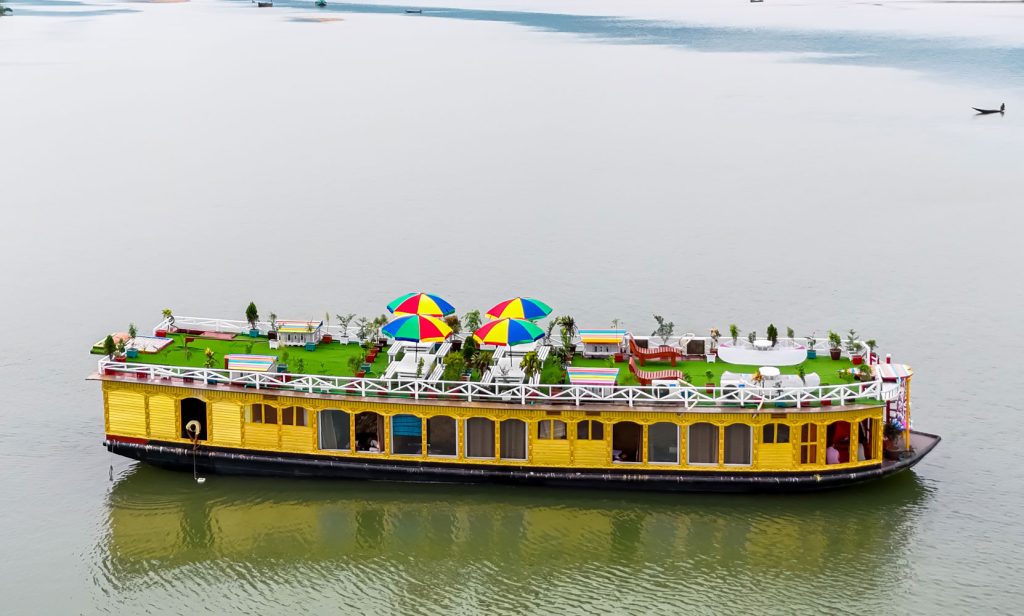
To experience the haor’s vastness, most visitors stay on traditional houseboats that serve as floating accommodations.
-
Onboard Living: These boats typically feature private cabins, dining areas, and open decks for 360-degree views of the water and sky.
-
Local Cuisine: Stays often include traditional meals prepared on the boat using fresh haor fish and local ingredients.
Key Sightseeing Highlights
The region is famous for its crystal-clear water and diverse wildlife, especially during the winter when millions of migratory birds arrive.
-
The Watchtower: Centrally located, providing an elevated panoramic view of the expansive blue water and distant Indian hills.
-
Submerged Forests: Distinctive Hijal and Koroch tree forests thrive in the water, creating a mystical atmosphere as their branches peek above the surface.
-
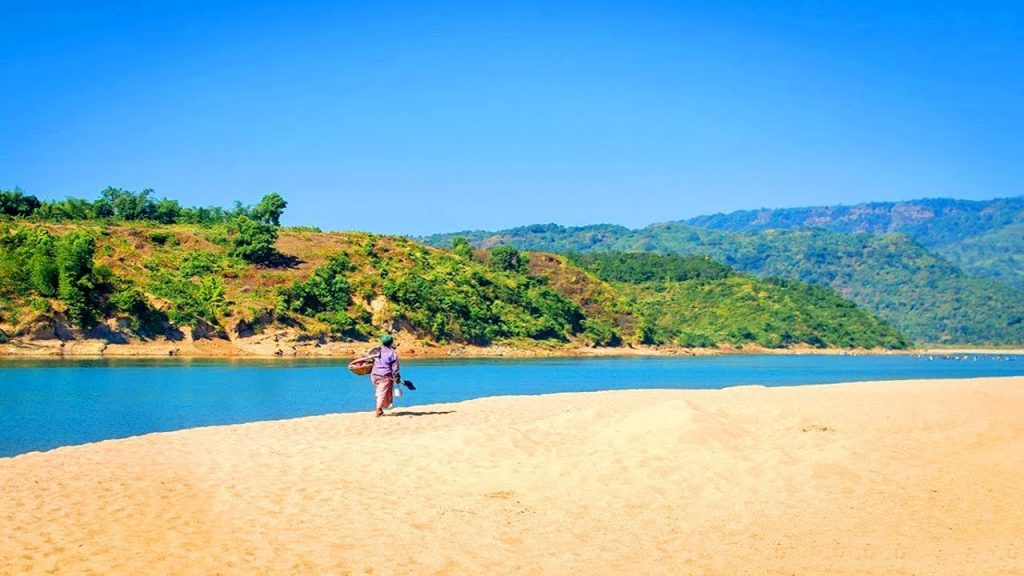
Nearby Gems: Many trips also stop at Niladri Lake (a turquoise-blue limestone quarry) and the Jadukata River, known for its golden sands and clear water.
Must-Visit Sightseeing Spots
- Watchtower Located at the center of the Haor, offering a panoramic view of the blue water and Indian hills.
- Hijal & Koroch Forest A "water forest" where trees are partially submerged, creating a mystical, green landscape
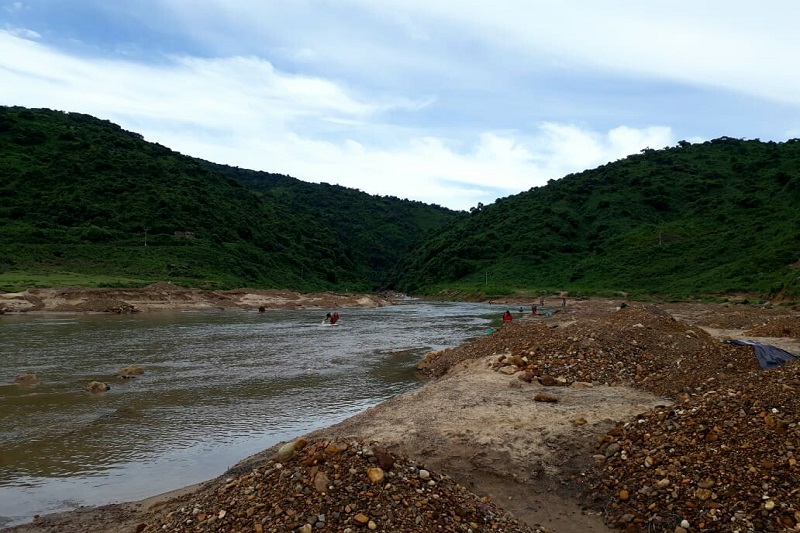
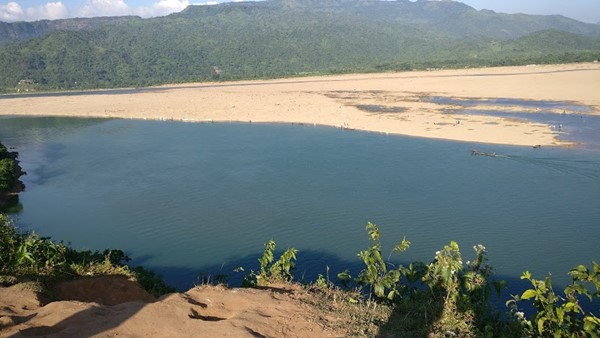
- Jadukata River Known as one of the most beautiful rivers in Bangladesh with clear water and golden sands.
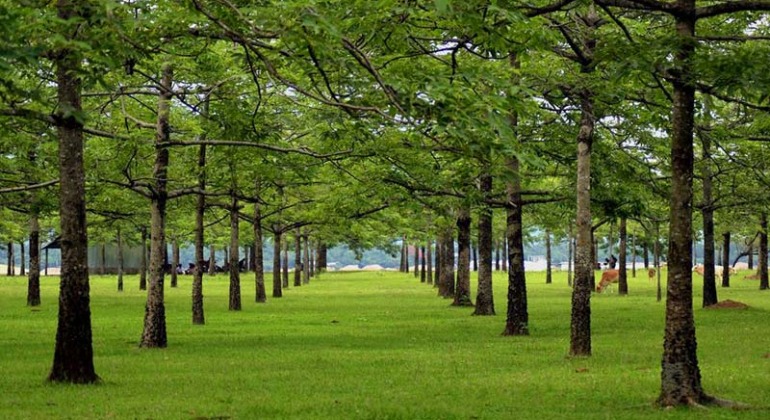
- Shimul Bagan A massive silk cotton tree garden that turns vibrant red during the spring.
- Niladri Lake A stunning turquoise-blue lake (an abandoned limestone quarry) situated right at the border.